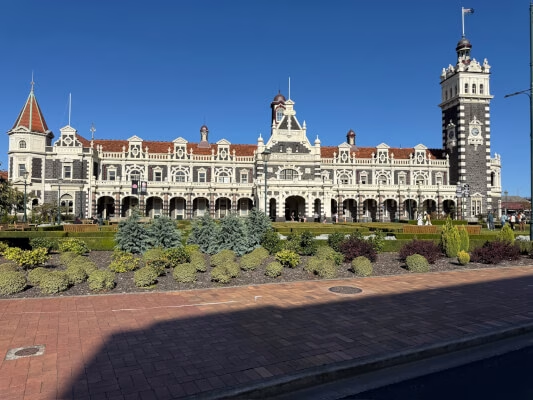
About Dunedin
Founded by Scottish settlers in 1848, Dunedin quickly grew wealthy during the Otago gold rush of the 1860s. Its name comes from the Scottish Gaelic for Edinburgh, and the city still carries strong Scottish influences in its architecture and culture.
Today Dunedin blends historic charm with a lively student atmosphere, thanks to the University of Otago. It’s known for its striking heritage buildings, steep streets (including Baldwin Street, once the world’s steepest), and nearby wildlife on the Otago Peninsula. Thoughtful, characterful, and a little bit quirky. 🐧
Credit: chatGPT
Our stay
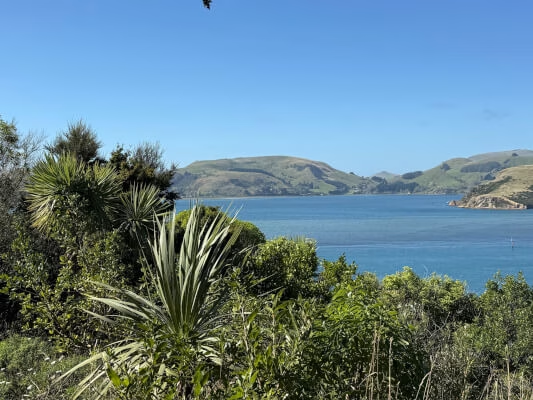
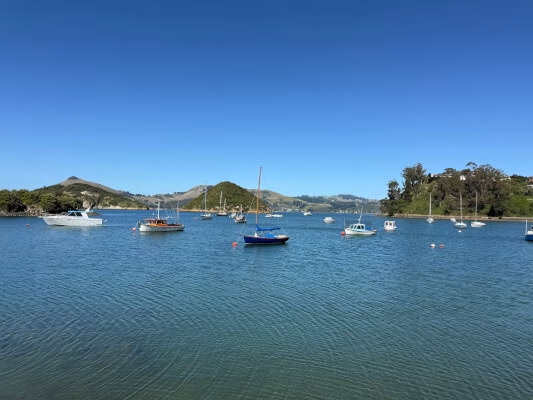
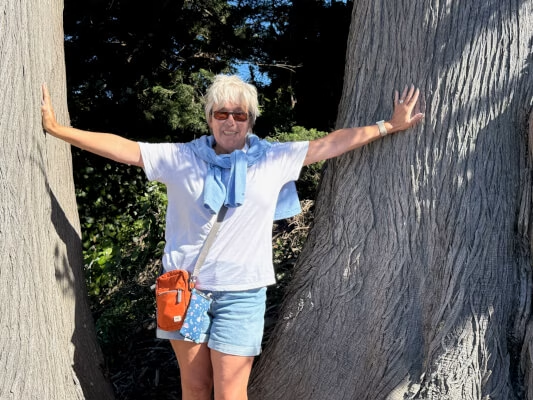
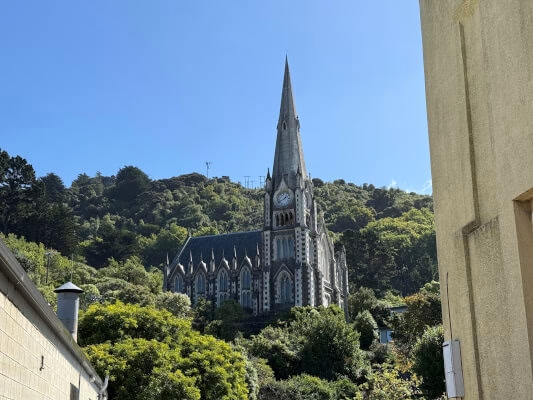
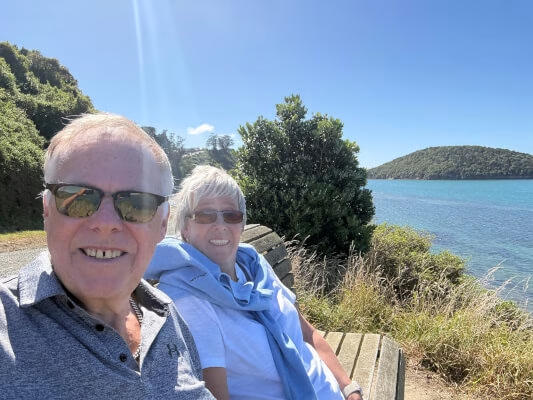
Our return to the East Coast was a lot more straight-forward than our last unplanned one, and we completed the 4 hour drive by late afternoon, arriving at Dunedin House Boutique Hotel. The hotel is stylish but although we had booked one of the principal rooms (King with Balcony) it was very tight on space compared to some of our other stops.
That evening we took a downhill stroll to the Octagon Hub, seemingly the main hospitality area, visited a couple of bars and ate at Graze and Glow, a tapas bar where all dishes seemed to be NZ$9.99 (about a fiver). The bar was buzzy and the casual eating of tapas suited our needs.
The following day was our only full one in Dunedin as we are only stopping 2 nights. In pre tour research, we hadn’t really identified much in the city to visit, but had read that Port Chalmers up the coast was lovely. So off we set.
Whoever described the place as quaint was either on something, or we went to the wrong place! We parked on the main high street which was a pretty standard NZ mix of cafes, curios and boarded up shops. There is a large port, that serves not only containers, but a seemingly endless stream of lumber hauling trucks – 3 carriage road trains almost. There seemed to be another one running through the town every 3 or 4 minutes.
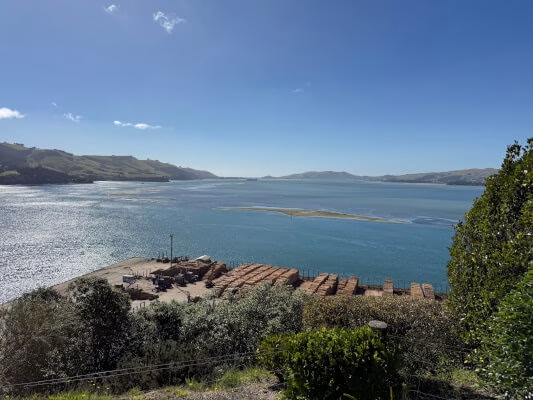
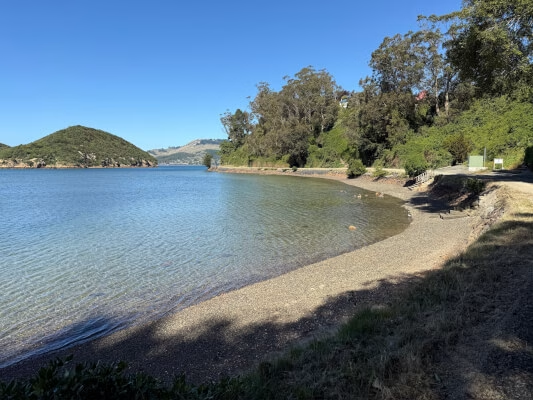
We decided to take a walk around the beach road, and were astonished at the amount of lumber stored in the ports yards, and watched in fascination the process of trucks offloading their timber, then lifting their rear carriage on to the front one, and roaring off half the length from when they arrived.
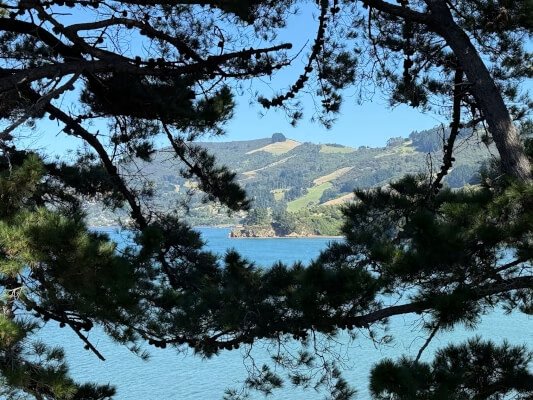
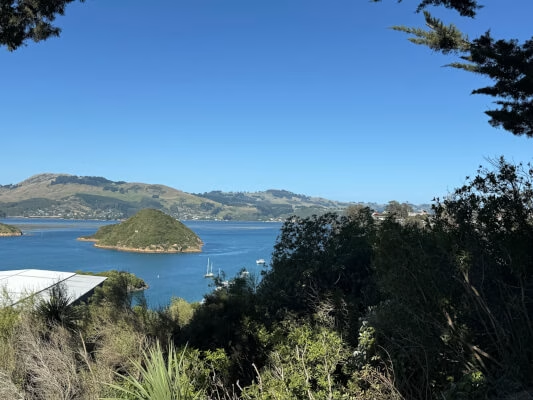
The walk took us nearly 2 hours, including a climb to the top off Falstaff Lookout, where we had sweeping views of not only the estuary, but also the lumber yards below.
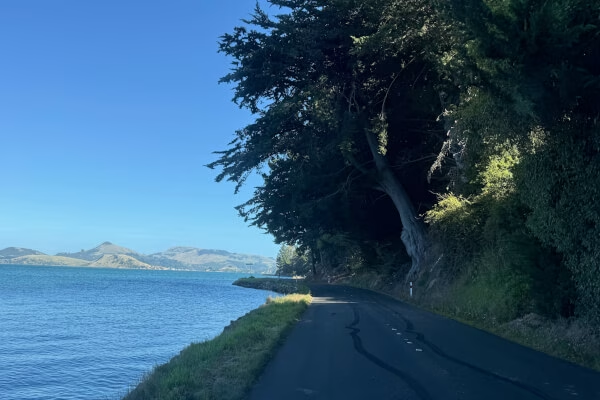
After a quick refreshment break (there was cake), we headed further up the coast along one of the most coast hugging roads that went on for miles and miles. This wasn’t cliff top, or frequent drives inland to return back to coast. the road was literally 3 metres above and adjacent to the beach. For miles and miles. It was a fun, snaking drive. We stopped at Careys Bay Hotel along the way where Steve enjoyed a pint of local stout which was delicious, Nikki being designted driver and sipping on Coke.
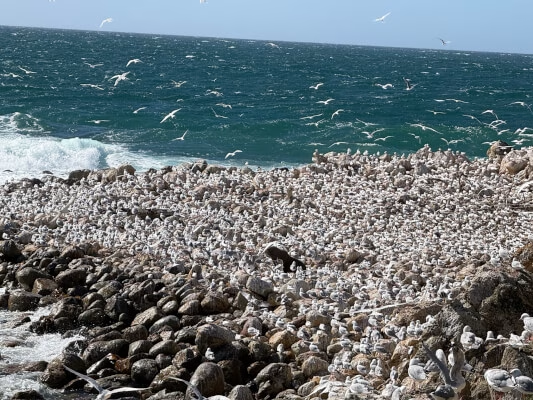
Our destination was Aramoana which is the western peninsula to the estuary and is famed for its wildlife. We parked up and took a long walk up the man made spit that guards the port entrance, where literally thousands seagulls split like the Red Sea as you walked along the path. “Oh look” said Steve “there’s a dead seal”. Only it wasn’t a seal or dead – it was a basking Sealion, which watched us carefully, but also disinterestedly, as we passed. As we continued the walk, there were many more of these basking beasts until we reached the end of the spit and the ground was literally covered in gulls (as well as their guano). We were lucky to see a Sealion among them, maruading to an extent as it was no doubt pleading with the birds to pipe down a bit so it could join his colleagues in their leisurely bask.
For our last night in Dunedin, we explored with the owners of the hotel a few restaurant options. However, by now Nikki had declared that Dunedin was the second dump of our tour, Mackay being the previous, so we decided to stroll back into town. This time we went past Speights Brewery and discovered they had an alehouse tap room. So we went in and found it was brilliant – it was carvernous, buzzy, full of history and, most importantly, they had their own stout. We settled down with our drinks, took a look at the menu, which was also vast and amazing, and decided we would not bother to look any further. We both really enjoyed our meals and a few drinks more, and then decided to give the town another chance and found the Duke of Wellington which had a comprehensive selection of UK and Eurpean beers and was, unfortunately, as dead as a dodo. We had one drink and returned to the hotel to prepare for our checkout, Nikki impression of Dunedin not improved.


Leaving Dunedin
The next morning we had our second lovely breakfast at the hotel and were checked out and on our way by 10. In our research, we originally planned to drive to Christchurch, but we had discovered it would take us all day to do so. So we had decided to fly up. This gave us the benefit of an almost full day to further explore Dunedin as the flight was late afternoon.
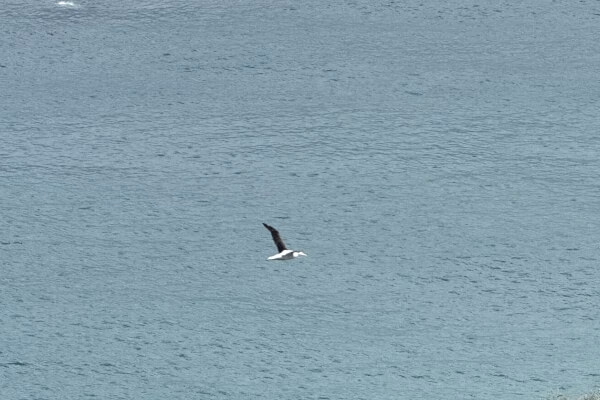
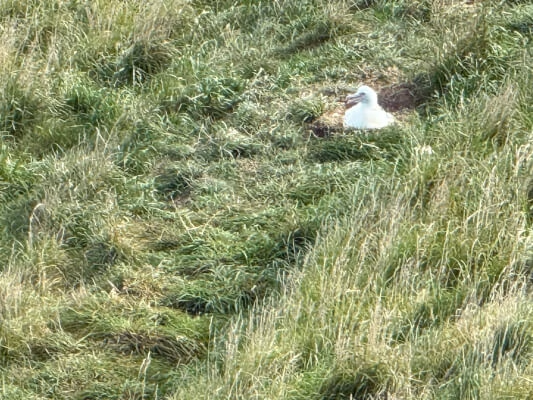
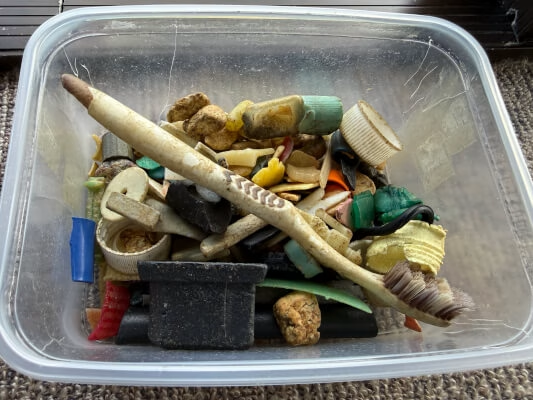
We set off across the eastern side of the estuary, up the Otago Peninsula, following another coast hugging road on what was a lovely drive. Our destination was the Royal Albatross Centre at the head of the peninsula at Harington Point. We booked a guided tour, and it was fascinating to learn about these birds with the longest wingspan in the world. We learned that adults weigh about 10kg which as Steve said is the same as our Christmas turkey – no wonder their wings are so large. We learned that they migrate to Chile, a distance over 3,000km in 10 – 12 days. We learned they take their rest by bobbing up and down on the ocean. We learned they return to Harington Point every 2 years to breed and both mother and father rear the chicks for close to a year, while the chicks rest, develop and grow in clifftop nests. We learned, unforunately, how plastic in the sea, was one of their biggest threats and were shown the contents of one birds stomach (fortunately washed and dried many years ago). It was a fascinating tour culimating in a stop at a viewing point where we not only saw 6 week old chicks on the nest (already 2kg in weight) but were lucky enough to see a soaring and majestic Royal Albatross in flight.
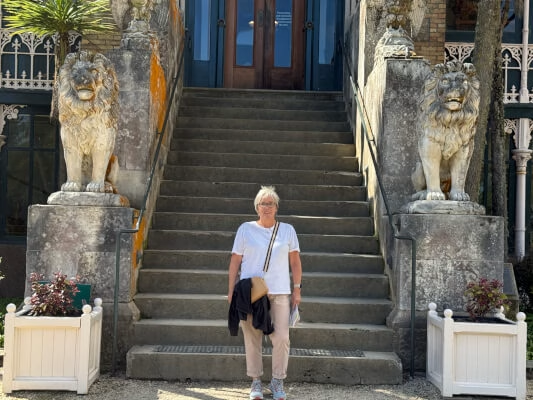
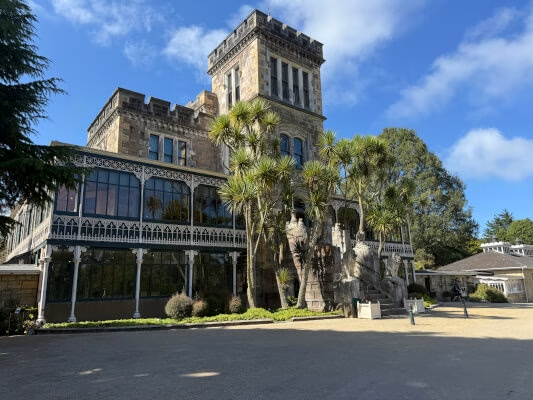
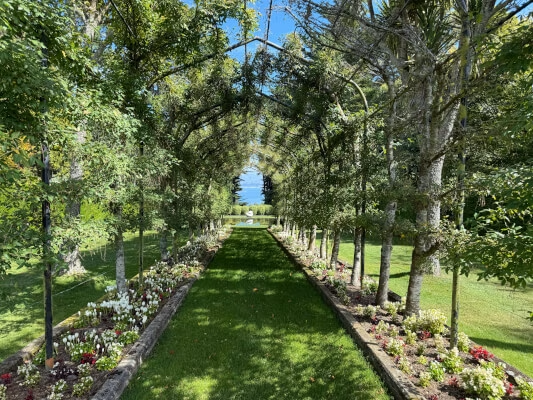
After albatrosses, we had to wend our way back to Dunedin Airport which is on south side of Dunedin, but still with time on our hands. We first stopped at Larnachs Castle, where we just bought tickets to the garden, not the house. After the most disgusting scone (made with cumin) and coffee, we spent about 45 minutes exploring the gardens, which were lovely. Unfortunately, as we did not go in the house, we never got to the bottom of the puzzle we found when we first heard about the castle – why on earth would you need to build one in the first place, with such little around to threaten in what must have been a deserted spot all those years ago? Maybe it was just a folly; maybe some mad Scotsman (are there any that are not) yearning for home.
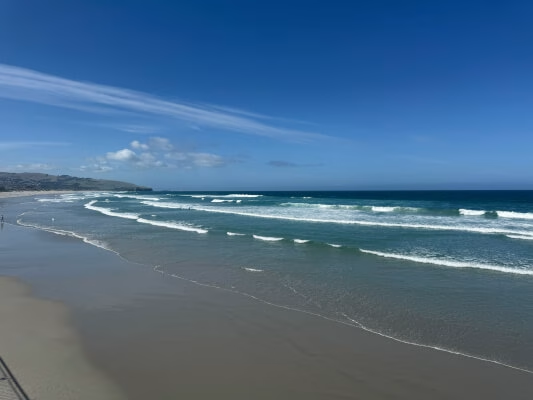
With a little time to spare, we next visited St Clair beach, which was a proper and lovely seaside town. It has the most magnificent beach that goes on for miles and miles. We stopped in a very friendly beach side cafe for a coffee (Nikki, driver) and a beer (Steve, navigator) and then set off for the airport, about half hour away.
Hamish says...
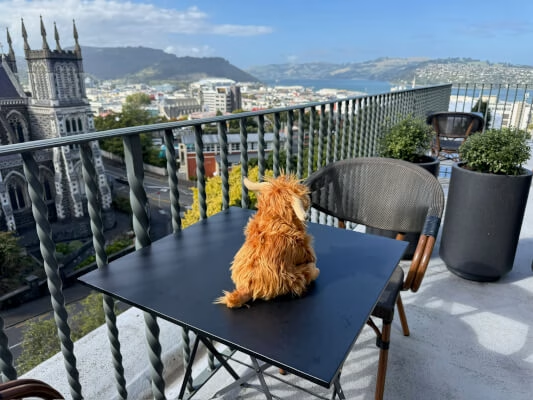
We didn’t really spend too much time in Dunedin itself, mainly because Nikki almost immediately on our first night decided it was a dump, and that girl does not like to change her opinion.
We did though agree that the countryside on both sides of the estuary was breathtaking and at times quaint. The coastal drives were brilliant, and the sight of thousands of gulls surrounding a sealion, along with the din and the smell thay make will live with us for a long while (Steve claims he still has their whiff in his nostrils today).
Steve felt another couple of nights there would have been great as it felt like we only scratched the surface. This time, Nikki disagreed (completely).
Whats next
We return our car that has served us well over a thousand kilometres of planned and unplanned driving. Interestingly, when we first hired a car back in Cairns, petrol was about 90p a litre (a lot lower than UK). By the time the Orange King had done his worst, we paid about £1.58 at Dunedin Airport. Git.
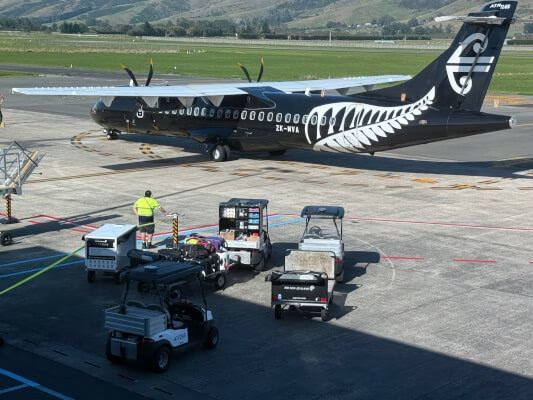
We then catch a 72-seater Air New Zealand turbo prop for a 1 hour flight up to Christchurch, thus avoiding a 6 hour drive without stops, or probably more like 8 hours with them. Nikki looks at the plane on the tarmac, and begins to hanker for the car.
We are looking forward to Christchurch as our very good friend Brin has told us it is great.